October 10, 2026


The U.S. Marshals Service has been part of the federal government longer than the Capitol dome, longer than the Secret Service, and longer than the FBI. It was created by the Judiciary Act of 1789 — the same law that built the federal court system — and its first members were appointed to do one unglamorous thing well: carry out whatever a federal court ordered. Two centuries later, the agency runs prisoner flights, protects judges, and tracks fugitives across state lines. The job changed; the premise never did.
The First Congress needed a court system, and it needed someone to make that system function. The Judiciary Act set up thirteen judicial districts and provided for a marshal in each, appointed by the president to a four-year term. Marshals served the process that started lawsuits, executed the judgments that ended them, attended court sessions, and took custody of federal prisoners.
They were paid largely through fees for the work they performed, which meant a marshal's income depended on how much business the court generated. Many hired deputies at their own expense. That fee structure shaped the office for decades: it rewarded hustle, and it left deputies on the road for long stretches with minimal supervision.
Early marshals did far more than courtroom chores. When the young federal government wanted a national headcount, marshals ran it — they conducted the decennial census from 1790 until a dedicated census office took over after 1870. When settlers in western Pennsylvania refused to pay a federal excise tax on whiskey in 1794, marshals served the warrants and rode with the militia that put the rebellion down.
Some of that history is hard to read. Marshals also enforced the fugitive slave laws of 1793 and 1850, returning people who had escaped bondage to enslavement. The office has always been an instrument of federal courts, and federal courts have not always been on the right side.
The territories gave the office its popular image. In places with no county sheriff and no state police, the federal marshal was often the only law with reach. A marshal could summon a posse comitatus — literally, the power of the county — to deputize ordinary citizens for a pursuit. An 1878 law, the Posse Comitatus Act, later restricted the use of federal troops for domestic law enforcement.
Judge Isaac Parker's court at Fort Smith, Arkansas, appointed hundreds of deputy marshals to police Indian Territory, a jurisdiction larger than several states. Among them was Bass Reeves, born into slavery, who became one of the most effective deputies in the territory and is credited with thousands of arrests. In Oklahoma Territory, three deputies — Heck Thomas, Bill Tilghman, and Chris Madsen — earned the nickname the Three Guardsmen for their pursuit of the Doolin and Dalton gangs. The work killed a great many men. The pay was a fraction of what a competent horseman could earn elsewhere.
Through the early twentieth century the marshal system stayed decentralized. Each district ran largely on its own, and standards varied from courthouse to courthouse. Prohibition handed marshals a flood of liquor cases. Later decades brought civil rights litigation, desegregation orders, and crowded federal prisons.
In 1969 the Department of Justice reorganized the scattered offices into a single bureau, the U.S. Marshals Service, led by a director. That change turned a collection of independent district offices into a national agency able to move people, information, and tactical resources across the country. Two programs from that era still define the work. The Witness Security Program, which the Marshals Service has administered since 1971, relocates witnesses and their families whose testimony puts them in danger. The Special Operations Group, formed the same year, gives the agency a tactical capability for high-risk arrests and courthouse emergencies.
Today's deputy marshal works one of five core assignments:
Fugitive work gets the attention. The agency's 15 Most Wanted list, started in 1983, has produced arrests around the world. Task forces make the rest possible: a deputy with federal authority working a case alongside the local officers who know the neighborhood. Federal reach plus local knowledge is the practical reason the model works.
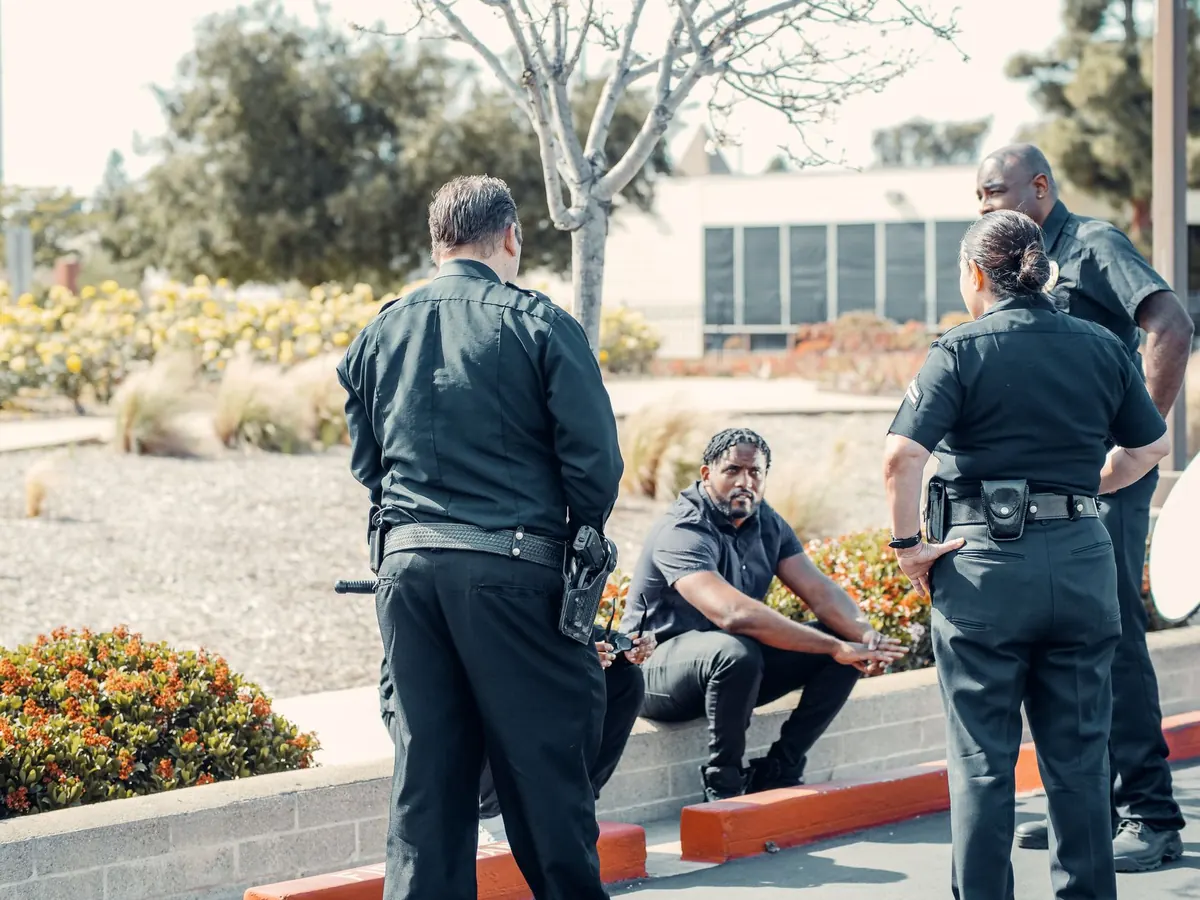
Most people never cross paths with a deputy marshal. When they do, it is usually one of three situations.
Anything involving a warrant, a summons, or a criminal charge is a legal matter. Talk to a licensed attorney in your jurisdiction rather than relying on general information, including this page.
Photo: HansLinde / Pixabay

An almanac for marshals and law enforcement..
Copyright © 2026 The Marshal Manac. All rights reserved. The Marshal Manac.